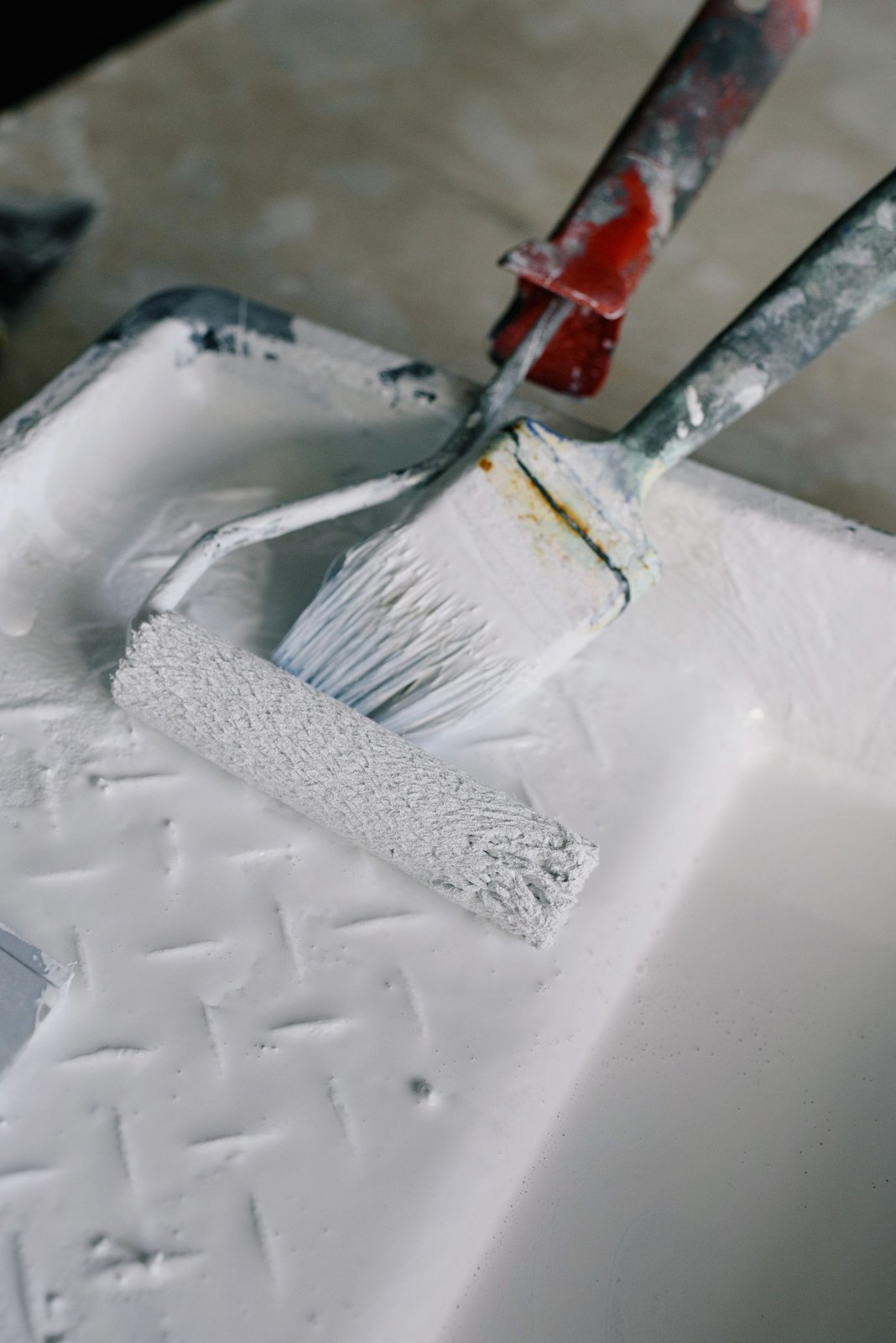
Take leftover stain, varnish, polyurethane, shellac, lacquer and wood or masonry sealer to a paint drop-off site or your household hazardous waste program. In PaintCare states, most single-part finishes are on the drop-off list. Two-part products are not. Never pour finishes down a drain, and treat oil-soaked rags as a fire risk right away.
What’s the best way to get rid of leftover stain or varnish?
Here are your options, from best to last resort. Pick the first one that works for you.
- Use it up. A second coat, a shelf, a fence board or a touch-up kit for later all count. Sherwin-Williams suggests tapping the lid shut with a rubber mallet so small amounts stay fresh for touch-ups.
- Give it away. A sealed, labeled can of deck stain or polyurethane is useful to a neighbor, a theater group or a reuse store. Only give away products in the original, labeled can.
- Drop it off at a paint drop-off site. In PaintCare states, many paint stores, transfer stations and hazardous waste sites take stains, varnishes, single-part urethanes, shellac, lacquer and sealers.
- Take it to a household hazardous waste site or event. This works in every state, and it is the right place for products PaintCare does not take.
- Ask about pickup. If you have a lot of cans, no car, or mobility limits, some cities run home pickup for hazardous waste, and private services like Paint Again can collect paint and finishes from your home.
Which finishes do paint drop-off sites take?
PaintCare runs drop-off programs in California, Colorado, Connecticut, the District of Columbia, Illinois, Maine, Maryland, Minnesota, New York, Oregon, Rhode Island, Vermont and Washington. Its product list is the clearest guide to what counts as "paint" for recycling. Outside those states, your county or city hazardous waste program sets its own list.
| Product | PaintCare drop-off? | If not, where it goes |
|---|---|---|
| Wood stain (oil-based or water-based, solid or semi-transparent) | Yes | — |
| Varnish, shellac, lacquer | Yes | — |
| Polyurethane / urethane (single-part) | Yes | — |
| Wood, concrete or masonry waterproofing sealer | Yes | — |
| Deck coatings and floor paint | Yes | — |
| Primer, sealer, undercoater | Yes | — |
| Two-part (two-component) finishes, epoxy floor kits | No | Household hazardous waste site |
| Marine (boat) varnish and auto finishes | No | Household hazardous waste site |
| Spray cans of stain or clear coat | No | Household hazardous waste site; see our spray paint guide |
| Mineral spirits or thinner used for cleanup | No | Household hazardous waste site |
| Wood glue, caulk, epoxy, adhesives | No | Ask your local waste program |
Is oil-based stain hazardous?
Usually, yes. Oil-based stains, varnishes and polyurethanes are made with solvents. Minwax’s safety data sheet for its oil-based Wood Finish stain classes it as a flammable liquid. It warns that the vapors can cause dizziness and that long-term overexposure can harm the brain and nervous system.
The same sheet says not to let the product enter drains, sewers, groundwater or streams. Sherwin-Williams also says never to pour stain down a drain or storm sewer.
NFPA, the fire safety group, lists lacquer as a flammable liquid and oil-based stains as combustible liquids. Both can catch fire from a spark or flame. Keep them tightly closed in their original cans, and never store them in glass jars.
Water-based stains and finishes are less of a fire risk. They still don’t belong in a storm drain, and some programs still want them as hazardous waste.
Can you throw stain or polyurethane in the trash?
Not while it’s liquid. Oil-based finishes should go to a drop-off or hazardous waste site in every state.
In California, all paint is banned from the trash. CalRecycle says oil-based paint waste is hazardous and latex paint waste is presumed hazardous. Many counties in other states also ask you to bring all liquid finishes in.
Some places let you dry out water-based paint and throw the can away. King County, Washington, for example, allows dried latex paint in the garbage with the lid off. Before you do that with a water-based stain or polyurethane, check that your local program treats it the same way.
The fire risk: rags, steel wool and sanding dust
This is the part most people miss. Rags soaked with oil-based stain, linseed oil, tung oil or oil varnish can heat up and catch fire on their own as they dry. NFPA says this doesn’t happen with water-based finishes.
Minwax’s safety sheet for its oil-based stain warns that rags, steel wool and sanding residue can catch fire if thrown away wrong. It says to put them right away in a sealed, water-filled metal container.
Don’t toss used rags in a trash can or leave them in a pile in the garage. Our oily rags guide has the full steps.
Two-part finishes and epoxy
Two-part (two-component) products come with a separate hardener. Examples include some floor finishes, garage floor epoxies and marine varnishes. PaintCare does not take them.
Keep both parts in their own labeled containers and take them to a household hazardous waste site. Tell staff it’s a two-part product. Don’t mix the leftovers to harden them unless the label or your local program tells you to.
How do you clean up after staining?
Sherwin-Williams says to clean tools with solvent after oil-based stain, and with soap and water after latex stain. Your can’s label will tell you which kind you have.
Used thinner and mineral spirits are a separate waste. PaintCare does not take them. Let the solids settle, reuse the clear part, and take the rest to hazardous waste. Our brush-cleaning guide walks through it.
Old, frozen, gummy or unlabeled cans
- Skinned over or thick: still goes to a drop-off. You don’t need to stir it or open it.
- Frozen water-based finish: it may not work anymore, but it can still go to a drop-off site.
- Rusted or leaking can: put it inside a larger sealed container or bucket with a lid, and tell the site. PaintCare asks for cans that aren’t leaking.
- No label: most PaintCare sites require the original label. Take unlabeled cans to a hazardous waste site and say what you think it is.
- Very old cans: older wood finishes can contain ingredients that are no longer sold. Treat them as hazardous waste and don’t open them to check.
How should you store finishes until drop-off day?
- Keep lids tight and cans upright, in the original labeled containers.
- Store them where kids and pets can’t reach. Minwax’s safety sheet says to keep its stain out of reach of children and to store it in a cool, well-ventilated place.
- Keep them away from furnaces, water heaters, sparks and flames.
- Don’t pour leftovers together. EPA warns that mixed household chemicals can react.
What does it cost?
It depends on your area. Some county hazardous waste sites take household waste from residents at no charge. Hennepin County, Minnesota, for example, doesn’t charge for oily rags. Others charge a fee or limit how much you can bring.
If you’d rather not haul cans yourself, Paint Again can pick up paint and finishes from your home. Pickup pricing is shown on this page.
Large amounts and businesses
Contractors, furniture refinishers and property managers often can’t use household hazardous waste sites. In Sacramento, for example, businesses must use a separate small business program instead. In PaintCare states, PaintCare offers pickup for large amounts; King County lists it for more than 100 gallons. Otherwise, ask your county about small business programs or hire a licensed hazardous waste hauler. See our guide for contractors.
Checklist
- Read the label: oil-based or water-based, one part or two?
- Keep each finish in its original, labeled can with the lid on tight.
- Look up a PaintCare site or your household hazardous waste site, then call.
- Pack used thinner separately. It is not paint.
- Lay oily rags flat outside to dry, or put them in water in a closed metal can.
- Put rusty or leaking cans in a bigger sealed bucket before you drive.
Common questions
How do you dispose of polyurethane?
Take leftover single-part polyurethane to a paint drop-off site or household hazardous waste site. In PaintCare states, single-part urethanes are on the accepted list. Two-part polyurethane goes to hazardous waste.
Can I pour leftover stain down the drain?
No. Sherwin-Williams says never to pour stain into a drain or storm sewer, and Minwax’s safety sheet says to keep its oil-based stain out of drains and sewers.
Is water-based polyurethane hazardous waste?
It depends on where you live. It’s less of a fire risk than oil-based. Some programs still want all liquid finishes brought in, and in California all paint is banned from the trash. Ask your local program.
Can I let stain dry out and throw it away?
Don’t do this with oil-based stain. Some local programs allow dried water-based paint in the trash, but check first. Drying solvent finishes puts fumes in the air and adds a fire risk.
Does Home Depot or Lowe’s take old stain?
Some stores are PaintCare drop-off sites, but it’s store by store. Use PaintCare’s locator and call the store before you go.
Can stain rags really catch fire by themselves?
Yes. Oils in oil-based stains give off heat as they dry. NFPA says a pile of rags traps that heat until it can start a fire.
Is deck sealer the same as paint for disposal?
Usually. PaintCare accepts waterproofing sealers for wood, concrete and masonry, and deck coatings. Outside PaintCare states, take it to household hazardous waste.
What about marine varnish?
PaintCare does not take marine paints. Take marine varnish to a household hazardous waste site.
Sources
Checked October 7, 2026. Your local drop-off site’s rules come first.
PaintCare: accepted and not accepted products ↗PaintCare: program states ↗Sherwin-Williams: cleaning up after exterior stain ↗Minwax Wood Finish (oil-based stain) safety data sheet ↗NFPA tip sheet: Safety with oily rags (via City of Bloomington, MN) ↗CalRecycle: paint ↗EPA: household hazardous waste ↗Hennepin County: rags with solvent or oil ↗Sacramento Stormwater Quality Partnership: painting without polluting ↗King County, WA: latex, water-based or acrylic paint ↗How we research →