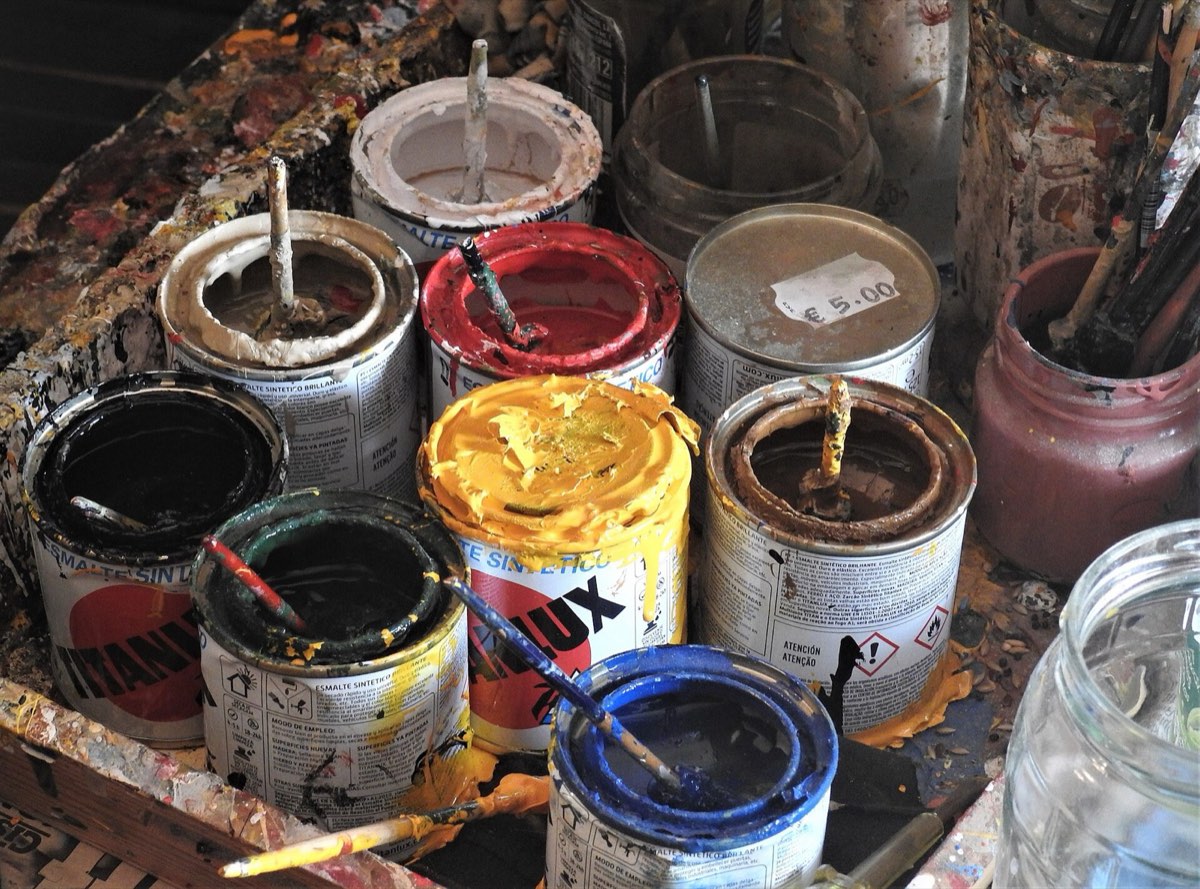

Read the cleanup directions on the can. Soap and water means latex (water-based). Mineral spirits or paint thinner means oil-based. Words like “alkyd” or a “Flammable” warning also point to oil. If there’s no label, rub dried paint with rubbing alcohol or acetone. If it softens and smears, it’s latex. If nothing happens, it’s likely oil-based.
Why it matters
Latex and oil-based paint go to different places. In many areas, you can dry latex paint and put it in the trash. Oil-based paint is flammable and, in most places, can’t go in the trash.
PaintCare sites take both kinds for free in the 12 PaintCare states and DC. Even there, staff may ask which you have, and businesses face limits on oil-based paint.
Check the label first
The label almost always answers the question. Look at the back of the can, not just the front.
| What you see on the can | What it usually means |
|---|---|
| Clean up with soap and water | Latex or water-based |
| Clean up with mineral spirits or paint thinner | Oil-based |
| “Latex,” “acrylic” or “water-based” | Latex or water-based |
| “Alkyd” or “oil-based” | Oil-based |
| “Flammable” or “Combustible” warning | Contains solvents. Usually oil-based. |
| “Satin,” “eggshell,” “gloss” or “enamel” | Only the finish. Check cleanup directions. |
| Two-part kit, or “industrial” use | Specialty product. Ask a hazardous waste site. |
The rubbing alcohol test
Use this when the label is gone or you can’t read it. It’s a painters’ rule of thumb, not an official test. We couldn’t find a paint maker or government page that describes it; these steps follow a professional painter’s guide (Brad the Painter). You need a bit of dried paint, like the drips on the rim, the lid, or a stir stick.
- Open a window. Rubbing alcohol and acetone both catch fire easily, so keep them away from flames.
- Wet a cotton ball or rag with rubbing alcohol. Nail polish remover with acetone works better if you have it.
- Rub the dried paint firmly for several seconds.
- Look at the cotton and the paint. If the paint softens, turns gooey or comes off on the cotton, it’s latex.
- If nothing happens, it’s likely oil-based.
How sure is the test?
It’s a quick check, not a lab test. The painter’s guide notes that alcohol softens latex less than acetone does, so a weak result is easy to miss. If you’re not sure, try acetone.
Some newer and specialty paints don’t follow the usual rules. When the test and the label disagree, trust the label.
Checking wet paint in the can
If the paint is still liquid, put a dab on scrap cardboard. Try wiping it with a wet paper towel right away. Latex wipes up with water while wet. Oil-based paint smears and won’t come off with water.
Don’t smell the can closely or heat it to find out. EPA says many paints give off fumes, so open a window or work outside.
Old cans and missing labels
- Very old cans: Sherwin-Williams says opened latex keeps about two years and oil-based paint up to 15 years. Age alone won’t tell you the type, so check the label or test it.
- Paint from before 1978: EPA says the federal government banned lead-based paint for homes in 1978. Old cans may contain lead. Don’t sand, scrape or burn old paint. See our lead paint guide.
- Faded label: Take a photo of what you can read. Show it to the drop-off site staff.
- No label at all: PaintCare sites only take paint with the maker’s original label. Take unlabeled cans to a household hazardous waste site. Tell them it’s unknown. Don’t write a guess on the can.
- Rusted or leaking can: Put it in a bucket or bin and call your hazardous waste program before you move it.
What not to do
- Don’t mix paint with water, thinner or another paint to test it in the can. EPA says mixing products can cause reactions and may make them unrecyclable.
- Don’t light paint or hold a flame near it.
- Don’t pour some out to see how it behaves.
- Don’t guess. If you’re still unsure, treat the can like oil-based paint and take it to a drop-off site.
Checklist
- Read the cleanup directions on the back of the can.
- Look for “latex,” “acrylic,” “alkyd” or “oil” in the name.
- Check for a “Flammable” or “Combustible” warning.
- If there’s no label, try the rubbing alcohol or acetone test on dried paint.
- Still unsure? Treat it as oil-based and drop it off.
Common questions
How can you tell if paint is oil-based without the can?
Rub a dried spot with rubbing alcohol or acetone on a cotton ball. Latex softens and comes off. Oil-based paint doesn’t change.
Is acrylic paint the same as latex?
Acrylic house paint is water-based and handled like latex. Artist and craft acrylics are a different product, and PaintCare doesn’t take them.
Is enamel paint oil-based?
Not always. “Enamel” describes a hard, glossy finish. It can be water-based or oil-based. Check the cleanup directions.
Does a metal can mean oil-based paint?
No. Both latex and oil-based paint come in metal cans. The can doesn’t tell you what’s inside.
Is primer latex or oil-based?
Primer comes in both. “Primer” says what it does, not what’s in it. Read the cleanup directions.
Is old paint from the 1970s oil-based?
Often, but not always. It may also contain lead. Test it, don’t sand or scrape it, and take it to a hazardous waste site.
Can I put paint in the trash if I’m not sure what it is?
No. Take unknown paint to a household hazardous waste site and tell staff it’s unknown.
Sources
Checked October 7, 2026. Your local drop-off site’s rules come first.
Fort Collins: Latex paint (Recycling A to Z) ↗Sherwin-Williams: How to clean painting tools ↗Benjamin Moore: How to clean brushes ↗Benjamin Moore: Paint disposal ↗16 CFR 1500.3: CPSC definitions of flammable and combustible (Cornell LII) ↗Brad the Painter (painting contractor’s blog): Testing old paint, oil or latex ↗PaintCare: Frequently asked questions ↗PaintCare: Products we accept ↗Sherwin-Williams: How to store, recycle and dispose of paint ↗EPA: Protect your family from sources of lead ↗EPA: Household hazardous waste ↗EPA: Volatile organic compounds’ impact on indoor air quality ↗How we research →