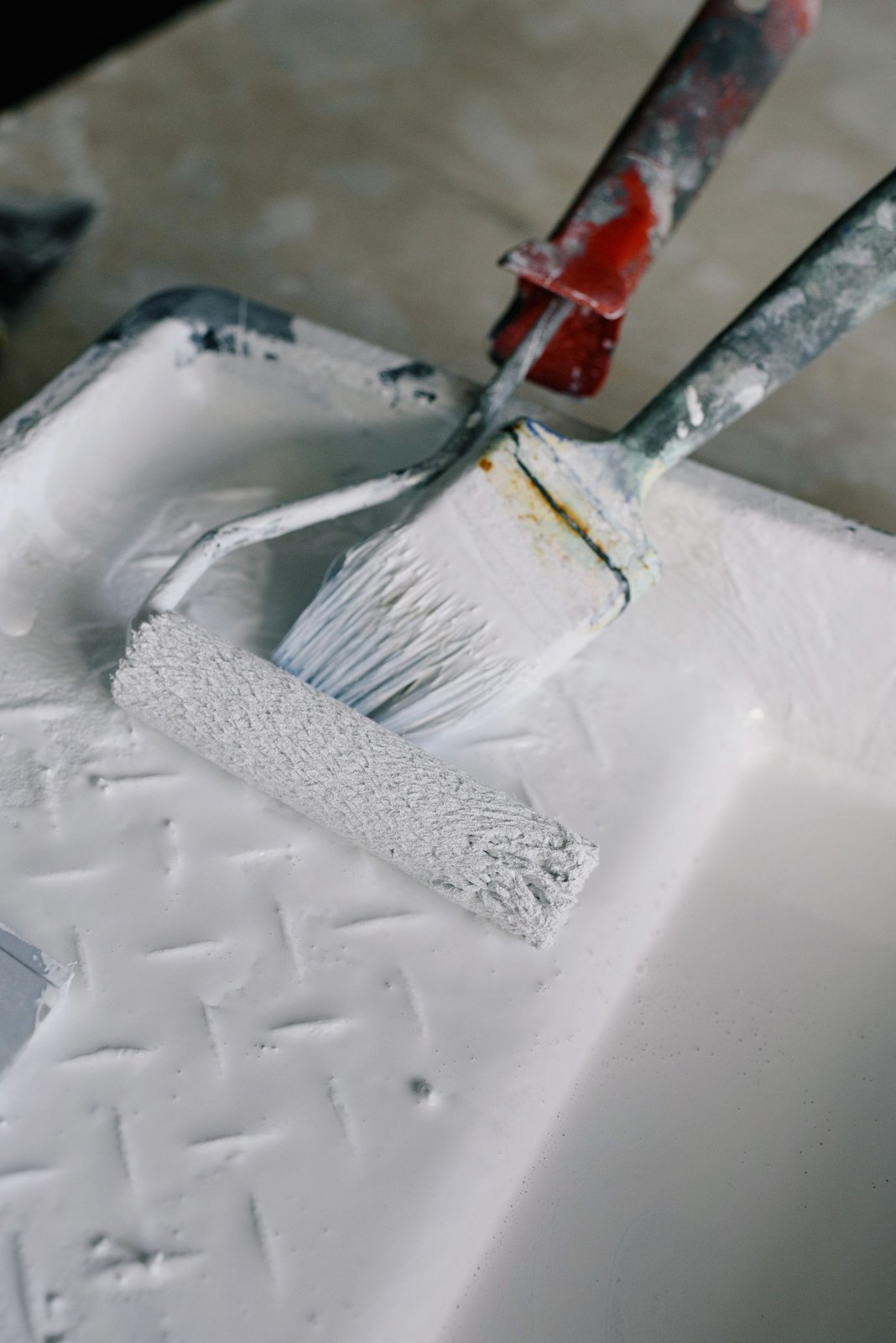
Reuse mineral spirits as long as you can: let the dirty liquid settle in a closed can, then pour off the clear part. Take what you can't reuse to your household hazardous waste site or collection day. Don't pour mineral spirits down a drain or on the ground, and don't trash the liquid. "Odorless" spirits can still burn.
What are mineral spirits?
Mineral spirits are a clear solvent refined from petroleum. Painters use them to thin oil-based paint and clean brushes. Klean-Strip Odorless Mineral Spirits, for example, is listed on its safety data sheet as 100 percent hydrotreated light petroleum distillate.
"Odorless" means the smelliest parts were refined out. It doesn't mean safer to dump. The odorless product's sheet still lists it as a flammable liquid that can be fatal if swallowed and it gets into the lungs.
Flash point is the lowest temperature at which the vapor can catch fire. It varies by formula, so check the sheet for the exact can you have.
| Product | Flash point | Boiling range | Notes |
|---|---|---|---|
| Paint Thinner (2023 sheet) | Above 100°F | 318–385°F | 80–100% mineral spirits plus trimethylbenzene |
| Odorless Mineral Spirits (2015 sheet) | Above 105°F | 318–354°F | Flammable liquid, Category 3 |
| Odorless Mineral Spirits and Odorless Painter's Solvent (2015 sheet) | 218°F | 449–505°F | Not classed as a flammable liquid, but it can still burn and is harmful if swallowed. Evaporates very slowly (rate 0.02) |
Can you reuse mineral spirits?
Yes, and you should. New York DEC and Pennsylvania DEP both tell residents to reuse mineral spirits by letting the paint settle out. Gamblin, which makes Gamsol odorless mineral spirits for artists, says artists can reuse it over and over for brush cleaning, because it clears as pigment sinks to the bottom.
- Set up two metal cans with tight lids, one for dirty spirits and one for clean. Label both.
- After painting, pour the dirty spirits into the first can and close it.
- Wait until the liquid on top looks clear. Small amounts clear faster; New York says large amounts can take months.
- Pour the clear spirits gently into the clean can. Leave the sludge behind.
- When the sludge builds up, scrape it into a separate closed can for disposal.
- Stop reusing when the spirits won't clear anymore. Then they go to hazardous waste.
Where to take mineral spirits
Mineral spirits go to your household hazardous waste program. Search your county's website for "household hazardous waste" or call its solid waste office. Hennepin County, Minn., for example, takes thinners at its drop-off sites in containers of 5 gallons or less. D.C. Public Works takes thinners and mineral spirits at free, register-ahead events for residents.
PaintCare paint drop-offs won't take them. PaintCare's product list names mineral spirits, paint thinners and solvents as things it doesn't accept.
- Keep the spirits in the original can if you can. If you must use another can, label it "mineral spirits" and never use a food or drink container.
- Tighten every lid. Wipe the outside of each can dry.
- Stand cans upright in a box or plastic tub with a towel around them.
- Keep dirty spirits, clean spirits and sludge in separate containers. Don't combine them with paint or other chemicals.
- Check your site's hours, residency rules and limits before you drive over.
Can you let mineral spirits evaporate?
Not as a way to get rid of a can. Many mineral spirits evaporate very slowly. Klean-Strip's odorless painter's solvent lists an evaporation rate of 0.02, about 50 times slower than the standard used for comparison. A pan left outside would give off vapor for a long time and stay a fire risk.
New York DEC does allow residents to mix less than one cup of leftover non-halogenated solvent (no chloro-, fluoro- or bromo- names) with plain clay cat litter, dry it outdoors and bag it for the trash. That's a small-amount rule for New York, not a national one. California bans solvents from the trash outright.
What if you spill mineral spirits?
- Turn off nearby flames and anything that sparks, like heaters or power tools. Open windows.
- Keep kids and pets out of the area.
- Soak it up with sand, dirt, cat litter or another material that doesn't burn, as the safety data sheet advises.
- Scoop the soaked material into a metal can or plastic container with a lid. Label it.
- Take it to your household hazardous waste site. Don't hose a spill into a storm drain.
Safety around kids, pets and heat
- Swallowing is the biggest danger at home. The label warning "may be fatal if swallowed and enters airways" means the liquid can be breathed into the lungs. If anyone swallows it, don't make them throw up. The safety data sheet says to get medical help right away; call Poison Control or 911.
- Store cans locked up, as the safety data sheet says, and away from furnaces, water heaters, pilot lights and stoves.
- Rags used with oil paint, stain or linseed oil can catch fire on their own as they dry. Follow our oily rags guide.
- The odorless kind is easy to forget about because you can't smell it. Label every container.
Large amounts and businesses
Household hazardous waste programs are for homes. Many limit the size of each container (Hennepin County's limit is 5 gallons), and some limit how much you bring per trip.
Businesses follow different rules. EPA calls a business that makes 100 kilograms or less of hazardous waste a month a very small quantity generator. At the 6.84 pounds per gallon on Klean-Strip's sheet, 100 kilograms is about 32 gallons of mineral spirits. That limit counts all your hazardous waste, not just solvent.
Painting contractors should ask their county about a very small business program or hire a licensed hazardous waste hauler. Paint Again's pickup is for paint and does not take mineral spirits or other solvents.
Checklist
- Check the label and safety data sheet for the exact product.
- Reuse it: settle, pour off the clear part, repeat.
- Scrape sludge into its own closed, labeled can.
- Pack cans upright and separate from paint.
- Drop off at your county household hazardous waste site or event.
- Never pour it in a drain, storm drain or yard.
Common questions
Can I pour mineral spirits down the drain?
No. They don't mix with water and they're flammable. EPA warns that hazardous products poured down drains can harm septic systems and treatment plants.
Are odorless mineral spirits safer to throw away?
No. Most odorless mineral spirits are still flammable liquids, and even the slower-burning kinds can catch fire and are harmful if swallowed. They go to hazardous waste the same way.
Is mineral spirits hazardous waste?
Leftovers from your home are treated as household hazardous waste. Federal law exempts household waste from business hazardous waste rules, but states can be stricter, and California bans solvents from the trash.
How do I dispose of Gamsol?
Gamsol is an odorless mineral spirit. Reuse it by settling, as Gamblin suggests, then take what won't clear to household hazardous waste.
Can I mix used mineral spirits with old paint to get rid of both?
No. Keep them separate. PaintCare sites take paint but not solvents, so a mixture can get turned away.
How much mineral spirits can I bring to a hazardous waste site?
It depends on the site. Many cap container size; Hennepin County, Minn., takes containers of 5 gallons or less. Check your county's page before you load the car.
What do I do with an empty mineral spirits can?
The safety data sheet says empty containers still hold residue and should not be reused. Ask your local program whether an empty, dry can goes in trash or recycling.
Sources
Checked October 7, 2026. Your local drop-off site’s rules come first.
W.M. Barr: Klean-Strip Odorless Mineral Spirits safety data sheet (rev. 04/16/2015) ↗W.M. Barr: Klean-Strip Odorless Mineral Spirits and Odorless Painter's Solvent safety data sheet (rev. 04/14/2015) ↗W.M. Barr: Klean-Strip Paint Thinner safety data sheet (rev. 08/09/2023) ↗New York State DEC: Household hazardous waste, solvent disposal (fact card) ↗Pennsylvania DEP: Paints, stains and varnishes (household hazardous waste fact sheet) ↗Gamblin Artists Colors: Studio safety ↗PaintCare: Products we accept and don't accept ↗Hennepin County, MN: Household hazardous waste ↗D.C. Department of Public Works: Household hazardous waste, e-cycling and document shredding ↗EPA: Household hazardous waste (HHW) ↗CalRecycle: Wastes banned from the trash ↗EPA: Categories of hazardous waste generators ↗How we research →