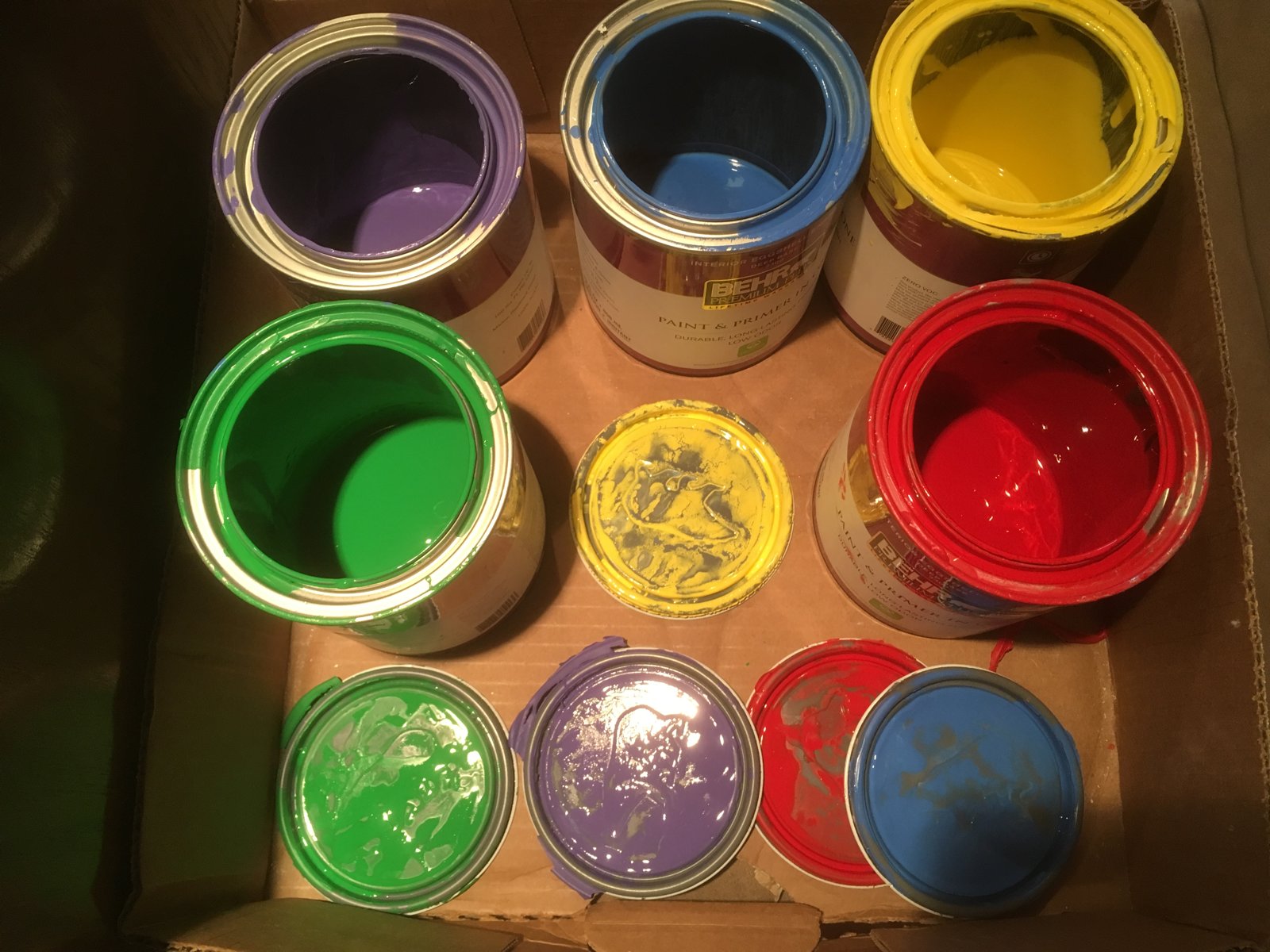

Hardening only works for latex (water-based) paint, and only where your trash program allows it. Under an inch of paint can air-dry in the can. For more, stir in an equal amount of clay cat litter or a paint hardener until no liquid is left. Trash it once it’s solid to the bottom. California doesn’t allow this.
Before you harden anything
Ask two questions first. Is it latex? And does your area let dried latex go in the trash?
Check the label. If it says to clean up with soap and water, it’s latex. If it says mineral spirits or paint thinner, it’s oil-based. Oil-based paint should not go in the trash, even hardened, in most places.
Then check for a free drop-off. In PaintCare states, sites take liquid paint for free. Hardening good paint throws away paint someone could use. Save hardening for small leftovers, spoiled paint, or places with no drop-off.
Three ways to harden latex paint
| Method | Best for | How long | What you need |
|---|---|---|---|
| Air-dry in the can | Less than an inch of paint | A few days in warm, dry weather | Nothing. Just take the lid off. |
| Clay cat litter | Partly full cans | About 10 minutes for the litter to set (King County). Allow overnight to be sure. | Clay litter, about equal to the paint |
| Paint hardener | Any amount of latex, fastest and least bulky | Minutes, per the maker | One packet per can size listed on the package |
| Sawdust, wood chips, sand or mulch | When you have it on hand | Overnight; add more if still wet | Enough to soak up all the liquid |
How much hardener or kitty litter per gallon?
Paint hardener comes as crystals in a bag or bottle. You stir it in and it turns the paint into a solid. Rust-Oleum’s Krud Kutter Waste Paint Hardener lists exact amounts on its data sheet. Other brands list their own amounts on the package, so read yours.
For cat litter, King County says to mix latex paint with an equal amount of clay-based litter. So one gallon of paint needs about one gallon of litter. That fills more than one can, so split it into two containers first.
Sawdust, wood chips, sand and mulch don’t come with exact amounts. Calvert County, Maryland, says to mix in litter, mulch, dirt or sand until it is thick, without overflowing, then let it set to a semi-solid like peanut butter. Lexington County, South Carolina, says to add more if needed after it sits overnight.
| Paint left | Krud Kutter hardener (3.5 oz bag treats ⅔ gal) | Clay cat litter (equal amount) |
|---|---|---|
| 1 quart | 1 bag | About 1 quart |
| Half a gallon | 1 bag | About half a gallon |
| Full gallon | 2 bags | About 1 gallon, split into two containers |
| Full 5-gallon bucket | 8 bags | About 5 gallons. Drop off instead if you can. |
Step by step: hardening a can of latex paint
- Pick a spot outside or in a garage with the door open. Keep kids and pets away. Spread newspaper or cardboard under the can.
- If the can is more than half full, pour half into a second container, like an old bucket or a box lined with a plastic bag. This gives you room to stir.
- If the paint is very thick, Krud Kutter says you can add a cup of water to help it mix.
- Add the hardener or litter a little at a time. Stir with a paint stick all the way to the bottom.
- Stop when there’s no liquid left. Let it sit until it’s firm. Litter can set in about 10 minutes. Overnight is safer for a full can.
- Check that it’s hard all the way through. Lexington County’s test: you should be comfortable holding the can upside down.
- Put it out the way your hauler asks. Most say to leave the lid off so the driver can see it’s dry. A few, like Calvert County, say to put the lid back on. Lexington County says to double-bag it.


Air-drying small amounts
If there’s only a little paint in the can, you don’t need anything. King County says to remove the lid and let it solidify in the can. This works best with a small amount and warm weather.
Carroll County, Maryland, says a can less than a quarter full dries in a few days in a well-ventilated spot. Denver says latex can dry out after a couple of warm, sunny days. Calvert County says to keep the open can under cover so rain can’t get in.
Don’t fill paint cans with water and leave them outside. Denver asks people not to do this.
Where you can’t trash hardened paint
- California: Not allowed. All leftover paint, dry or not, goes to a drop-off site.
- Vermont: State law bans paint from landfills. Solidified water-based paint under 1 gallon is exempt. Check with your solid waste district first.
- San Francisco: SF Environment says paint takes special handling and doesn’t go in any bin. Only empty, dry small cans go in the blue bin.
- Oil-based paint, anywhere: Vermont DEC calls oil-based paint hazardous and flammable and says never to put it in the trash. Benjamin Moore says the same. Krud Kutter notes its hardener absorbs less in oil-based paint.
- Some cities and counties: Rules are local. If your hauler’s page doesn’t mention dried paint, call and ask.
Safety tips
- Krud Kutter’s data sheet says to avoid skin and eye contact, avoid breathing the dust, wash your hands after, and keep it away from children.
- EPA says to open windows or work outdoors when using products that give off fumes, and to store them out of children’s reach.
- Use an old container and a paint stick to mix, not kitchen tools.
Special cases
- Spoiled latex: Sherwin-Williams says a sour or rotten-egg smell, or clumps that stay after stirring, mean the paint has gone bad. Spoiled latex is a good use for hardener, since no one can reuse it.
- Already dried out: PaintCare says paint that is already rock hard can go in the trash, except in California. In Vermont, state law exempts only solidified water-based paint under 1 gallon. You don’t need to add anything.
- Skin on top, liquid below: Poke through the skin and check. Harden the liquid part or drop the can off.
- Can with no label: Don’t harden it. If you can’t confirm it’s latex, take it to a household hazardous waste site.
- Rusted or leaking can: Set it in a bucket or plastic bin. Harden it there if it’s latex and your area allows it, or call your county hazardous waste program.
- Businesses and contractors: King County lets businesses trash latex paint if there’s under an inch and it’s dried, or if more is mixed with cat litter or hardener until solid. Other places may differ, and PaintCare sites take any amount of a business’s latex they have room for.
When hardening isn’t worth it
A full 5-gallon bucket takes about 5 gallons of litter or eight bags of hardener. That’s heavy and messy. A free drop-off is easier if you have one.
PaintCare sites take at least 5 gallons per visit. For 100 gallons or more, PaintCare offers a free pickup. If you have a lot of paint and no way to haul it, Paint Again can pick it up.
Checklist
- Make sure it’s latex: soap-and-water cleanup on the label.
- Check your local rule. Skip this in California.
- Look for a free drop-off before hardening good paint.
- Air-dry under an inch; use litter or hardener for more.
- Stir until no liquid is left, and let it set.
- Test it’s hard to the bottom, then trash it the way your hauler says.
Common questions
How long does it take kitty litter to harden paint?
King County says about 10 minutes for the litter to harden after you stir it in. Give a full can overnight and check it’s solid all the way down.
How much kitty litter do I need for a gallon of paint?
About an equal amount, so roughly one gallon of clay litter. Split the paint into two containers first so you have room to mix.
Does paint hardener work on oil-based paint?
Krud Kutter says its hardener can be used on oil-based spills, but it absorbs less. That doesn’t make hardened oil-based paint OK for the trash. Take oil-based paint to a hazardous waste or PaintCare site.
Can I use sawdust instead of kitty litter?
Yes. Several counties list sawdust, wood chips, sand and mulch. Add enough to soak up all the liquid, and let it sit overnight.
Is paint hardener better than kitty litter?
Hardener uses much less material and works in minutes. Litter is cheaper if you already have it, but you need about as much litter as paint.
Can I put the hardened paint can in recycling?
No. Cans with dried paint go in the trash where allowed. Only truly empty cans may be recyclable, depending on your local program.
Do I leave the lid on or off?
Most programs say lid off, so the driver can see the paint is dry. A few say lid on or bagged. Follow your own hauler’s instructions.
Can I harden a full 5-gallon bucket?
You can, but it takes about 5 gallons of litter or eight 3.5 oz bags of Krud Kutter hardener. A free drop-off or pickup is usually easier for that much paint.
Sources
Checked October 7, 2026. Your local drop-off site’s rules come first.
CalRecycle: Paint management ↗Rust-Oleum: Krud Kutter Waste Paint and Colorant Hardener technical data sheet ↗King County: Paint recycling and disposal ↗Carroll County, MD: Latex and water-based paint, stains and sealants ↗Calvert County Environmental Commission: Household paint waste disposal ↗Lexington County, SC: How to dispose of latex paint ↗Denver: Environmental Community Protection (paint) ↗Vermont statutes, 10 V.S.A. § 6621a (landfill disposal bans) ↗Vermont DEC: Proper recycling and disposal of paint ↗SF Environment: House paint ↗Benjamin Moore: Paint disposal ↗EPA: Volatile organic compounds’ impact on indoor air quality ↗King County: Latex, water-based and acrylic paint (businesses) ↗Sherwin-Williams: How to store, recycle and dispose of paint ↗PaintCare: Frequently asked questions ↗PaintCare: Large volume pickups ↗How we research →